
यह भी देखें


 13.05.2026 01:15 PM
The EUR/USD pair continued its downward movement on Tuesday after rebounding from the 1.1786 level. The pair consolidated below the 50.0% Fibonacci retracement level at 1.1745, which allows for expectations of continued decline toward the next Fibonacci level of 38.2% at 1.1666. A consolidation above the 1.1745 level would favor the euro and a return to the 1.1786 level, which has resisted the bulls several times.
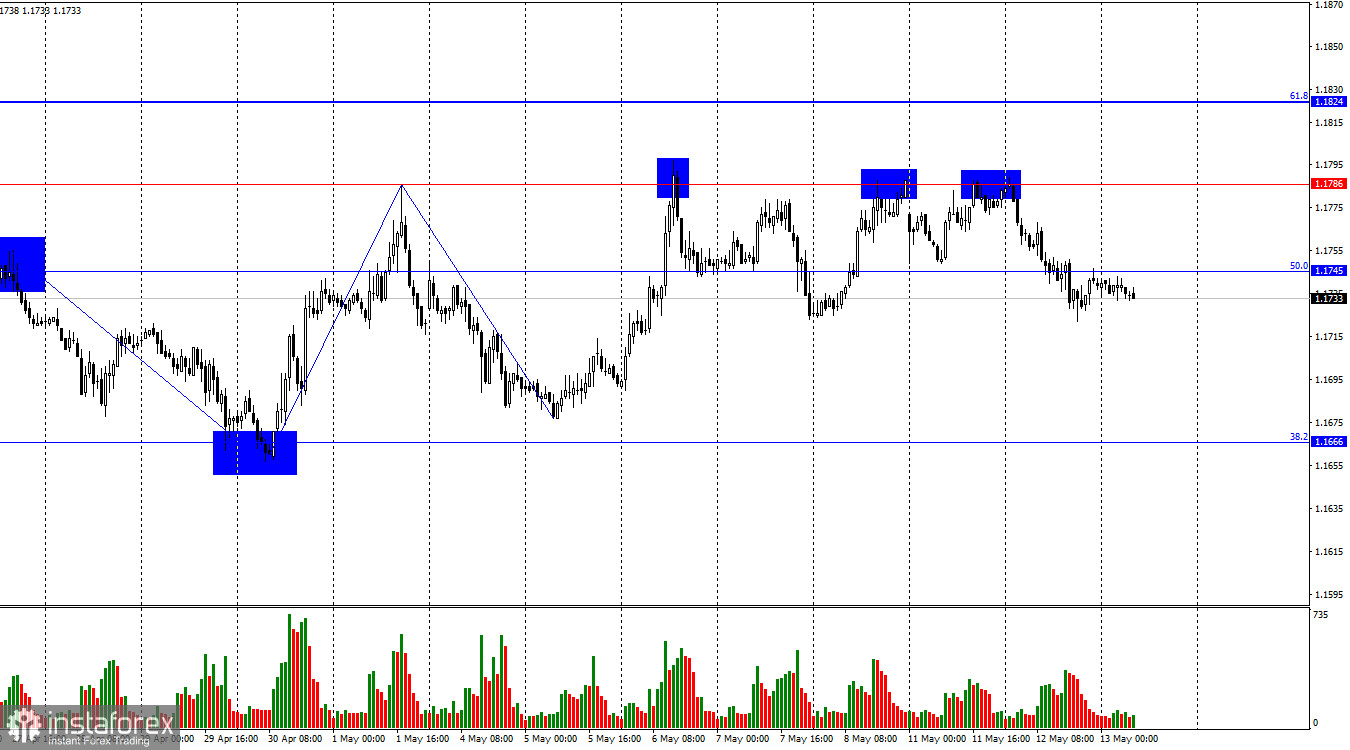
The wave situation on the hourly chart currently remains simple. The latest completed downward wave did not break the previous low, while the latest upward wave (which is still forming) broke the previous peak. Thus, the trend remains "bullish," but highly unstable — all recent waves are approximately equal in size, and the movement has shifted into a horizontal pattern. The temporary truce between Iran and the U.S. supported the bulls, but now, after five weeks, it can be said that geopolitics is moving toward preserving the conflict. Therefore, bullish attacks may remain restrained or stop altogether.
On Tuesday, negative geopolitical news continued to hit the market. It became known that Donald Trump intends to resume military operations and bombing strikes against Iran if negotiations with Tehran finally reach a deadlock. In my opinion, they are already there. Over the weekend, the U.S. and Iran once again failed to achieve any progress, and on Monday the U.S. president stated that the ceasefire is hanging by a thread. If Washington decides to resume missile strikes against Iran or forcibly lift the blockade of the Strait of Hormuz, Iran threatens to increase uranium enrichment to 90% and to respond to every strike, as it did in February and March. Thus, at the current moment, the parties to the conflict are not moving toward signing a memorandum of understanding or a full peace agreement. They are moving toward an escalation of the conflict, which under such a backdrop could continue for many months or even years. This is precisely why bullish attacks have ceased in recent weeks, while the bears are now attacking more frequently. The market still believes in a miracle and hopes that the parties will at least avoid a new war. Agreeably, a frozen conflict is better than a new war. However, the chances of this relatively positive scenario are shrinking with each passing day.
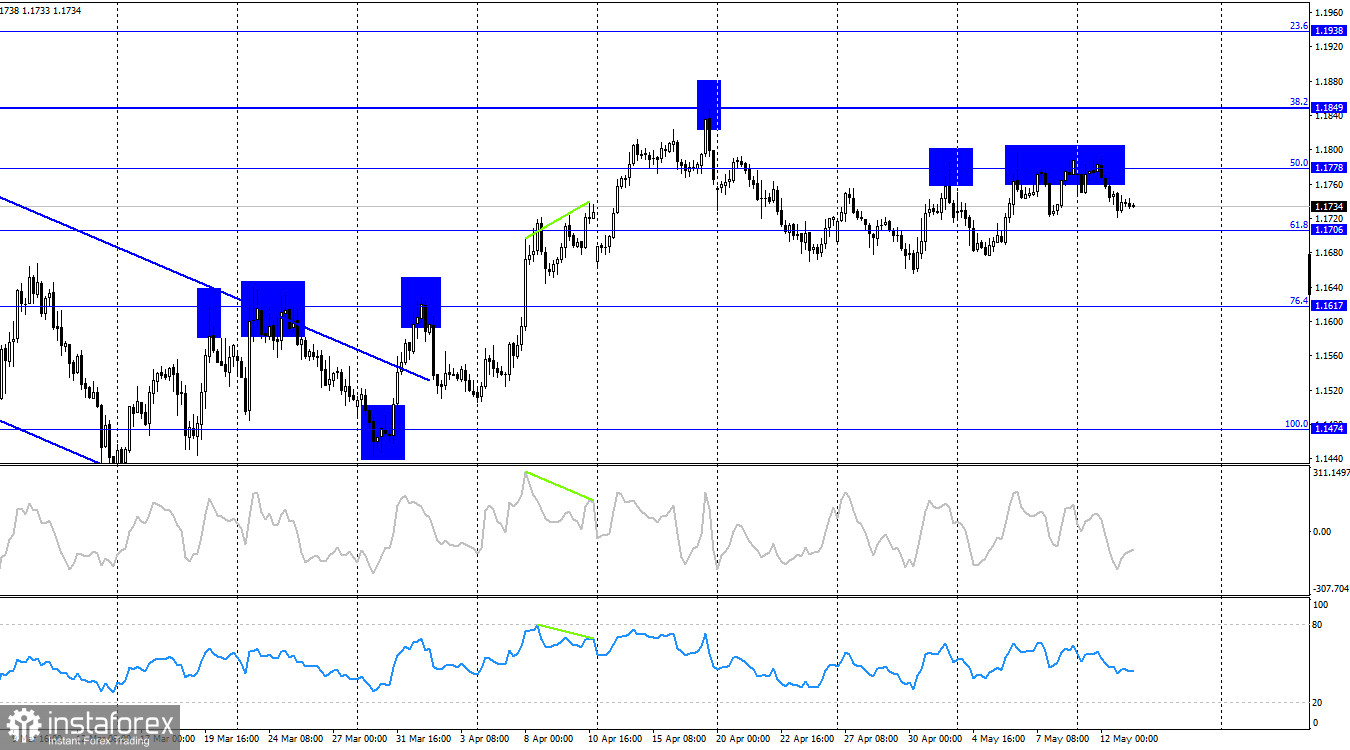
On the 4-hour chart, the pair made another rebound from the 50.0% corrective level at 1.1778, reversed in favor of the U.S. dollar, and began declining toward the corrective levels of 1.1706 and 1.1617. A consolidation above the 1.1778 level would allow traders to expect a resumption of the bullish trend toward the levels of 1.1849 and 1.1938, which formed after the pair exited the descending trend corridor. No emerging divergences are currently observed on any indicators.
Commitments of Traders (COT) Report:
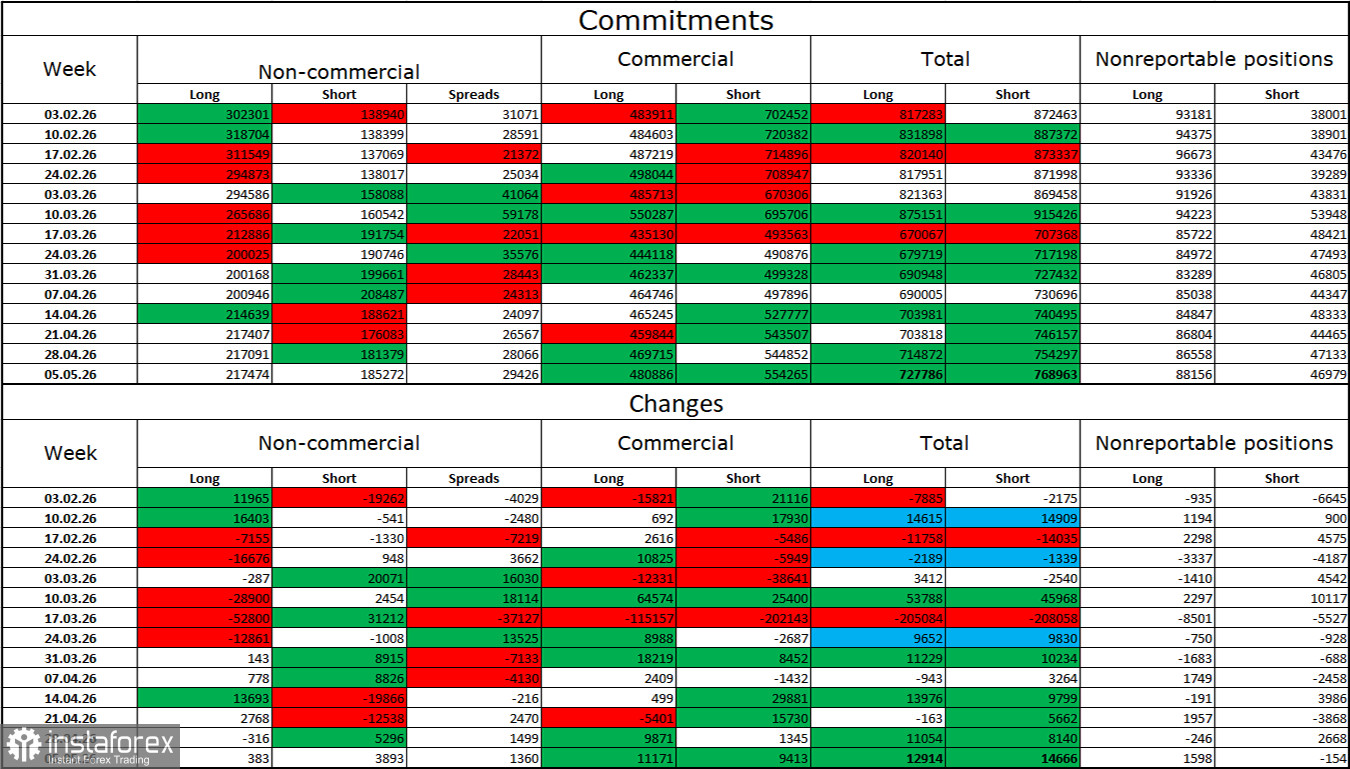
During the latest reporting week, professional traders opened 383 Long positions and 3,893 Short positions. Over seven weeks in February and March, the bulls' total advantage disappeared, and over the past six weeks the situation has somewhat balanced out. The total number of Long positions held by speculators now stands at 217,000, while Short positions amount to 185,000. The gap is once again widening in favor of the euro.
Overall, in the long term, large players continue to look at the euro with considerable interest. Of course, events of various kinds around the world — which have been plentiful in recent years — continue to influence investor sentiment. In particular, the market's attention remains focused on the Middle East, where the war has only been paused, not ended. Thus, in the near future, the euro and dollar exchange rates will depend not on the monetary policies of the Federal Reserve or the ECB, nor on economic data, but on developments in Iran.
Economic Calendar for the U.S. and the Eurozone:
The economic calendar for May 13 contains four entries, none of which are of particular interest. The impact of the news background on market sentiment on Wednesday is expected to be weak.
EUR/USD Forecast and Trading Tips:
Selling opportunities were available after a rebound from the 1.1786 level and after consolidation below the 1.1745 level on the hourly chart, with a target of 1.1666. These positions may still be held open today. New buying opportunities may be considered after consolidation above the 1.1745 level, with targets at 1.1786 and 1.1824.
Fibonacci retracement grids are drawn from 1.2082–1.1410 on the hourly chart and from 1.1474–1.2082 on the 4-hour chart.

