
Vea también


 30.03.2026 12:52 AM
The British pound is in an even more challenging position than the euro. Despite the UK's greater energy independence compared to the Eurozone, the pound responds more acutely to developments in the Middle East and to energy price fluctuations. For the EUR/USD instrument, the wave structure is clearer and more comprehensible, suggesting potential for growth. In contrast, the GBP/USD waves simply alternate. Even if they can be "packed" into a specific wave structure, such patterns are not useful as they lack clear interpretation.
Overall, the situation in the currency market remains unchanged. The news background is currently the most important factor. However, only those news items related to the Iran-US-Israel conflict are relevant. There is no ceasefire, no negotiations, and oil prices continue to rise. Additionally, Yemen threatens to block the Bab-el-Mandeb Strait, further complicating oil logistics from the region. This is why demand for the US dollar has increased on four of the five days this week, while the market has simply ignored economic data. It is worth noting that the inflation report was released in the UK this week, but it had no significance for traders.
Next week, the UK will release the final GDP report for the fourth quarter, and that's about it. However, the market has never favored British data releases, and under the current circumstances, they play no role. If traders decide to react to economic data, it will likely be the US labor and unemployment reports that take precedence. Geopolitics will remain the primary focus. In trading the British pound, I would currently recommend relying on the euro.
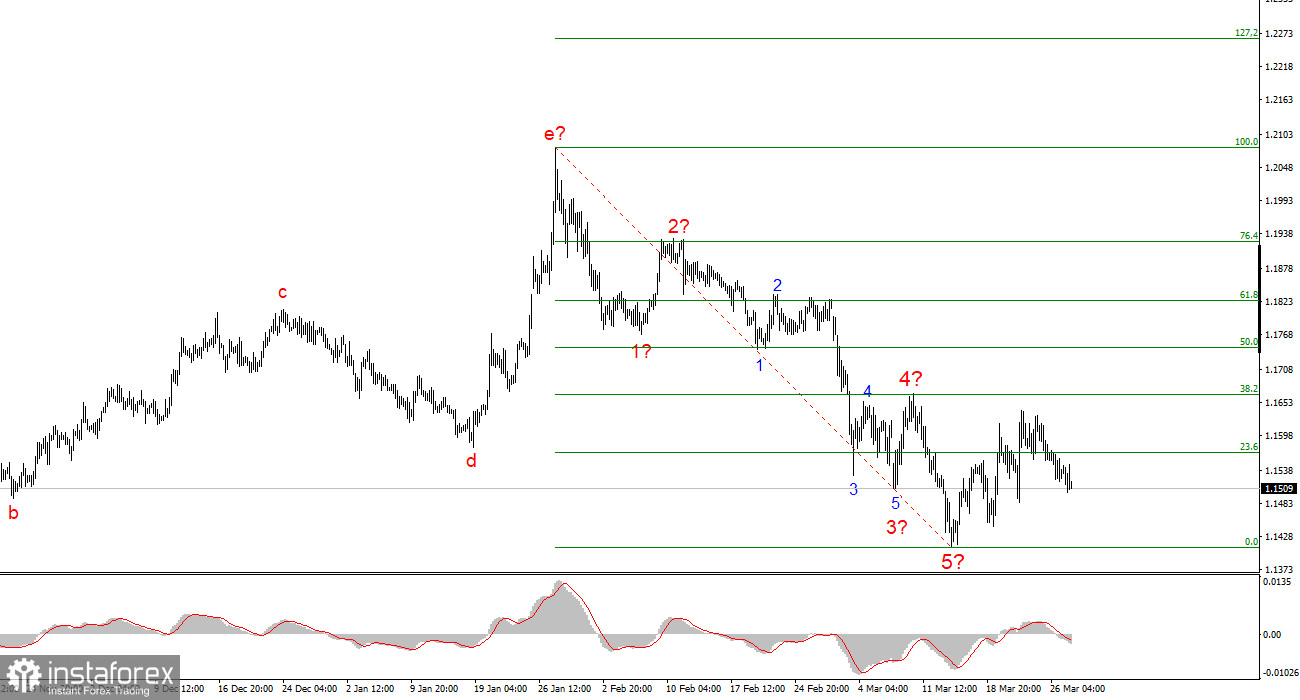
Based on the analysis of EUR/USD, I conclude that the instrument remains within an upward segment of the trend and, in the short term, has completed the formation of a downward wave set. Since the five-wave impulse structure is complete, my readers can expect price increases over the next week or two, with targets around 1.1666 and 1.1745, corresponding to the 38.2% and 50.0% Fibonacci. Further movements of the instrument will depend entirely on events in the Middle East.
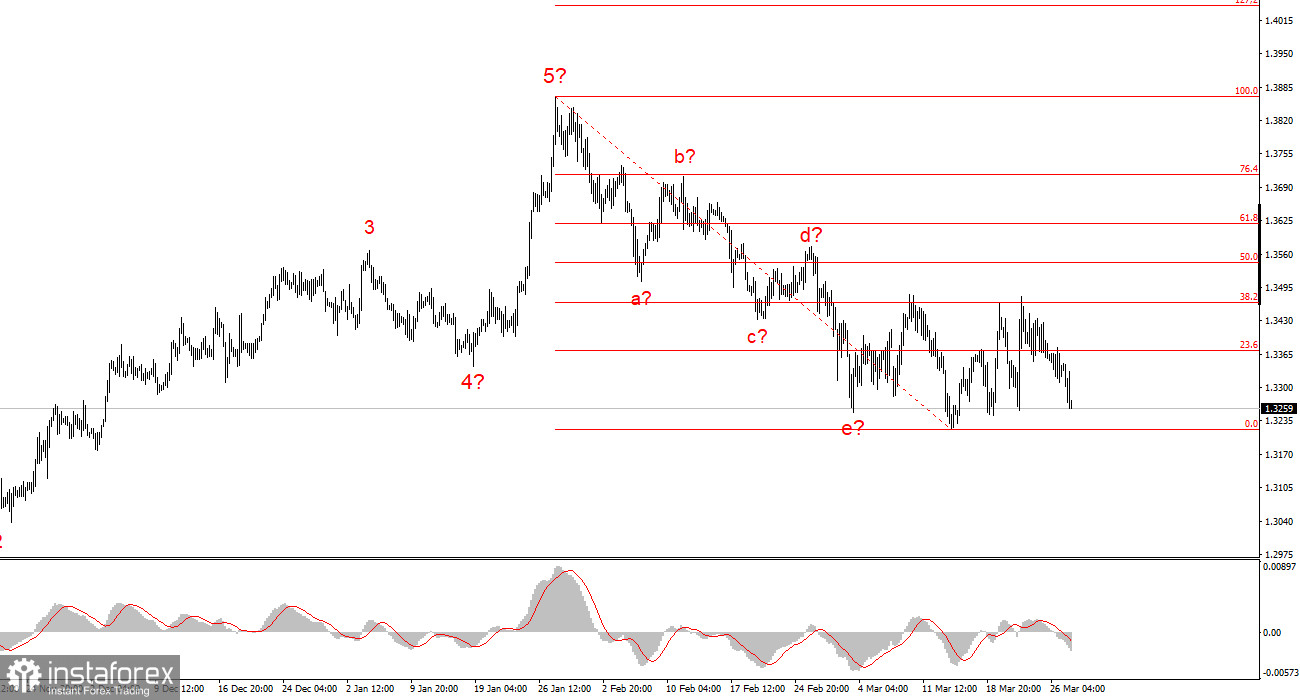
The wave structure of the GBP/USD instrument has become quite complex and difficult to read. We now see a seven-wave downward structure on the charts, which does not clearly represent a pattern. Most likely, there is an extension or complication within one of the waves. However, this does not make the wave pattern any clearer. If the wave pattern has once become complicated to the point of unreadability, it may become even more complicated multiple times. Therefore, I believe we should focus on the wave analysis of the EUR/USD instrument, which looks much clearer. It should also not be forgotten that geopolitical factors can send both instruments into a new decline at any moment. If this does not occur, the euro and the pound could see increases within the context of corrections.


