
यह भी देखें


 16.04.2026 12:34 AM
The Strait of Hormuz remains closed not only to foreign vessels but also to Iranian ones. In this way, Donald Trump is trying to further weaken the Iranian economy, for which oil sales are one of the main sources of income. Currently, the American blockade of the Strait of Hormuz has been in place for only a few days, during which no vessels have been able to exit the Persian Gulf. Iran has not yet responded to the blockade, but Tehran has its own cards to play.
In my opinion, Iran is not rushing to take retaliatory measures, wanting to avoid escalating the situation. Although Iran is prepared to engage in military action if necessary, it is unlikely they genuinely wants that. Therefore, on the eve of new negotiations with Washington, which may occur as early as Thursday, Tehran simply does not wish to increase tensions. However, if talks fail again and Tehran realizes that it cannot reach an agreement in the longer term, it may play another card—the Bab-el-Mandeb Strait.
Formally, access to the Bab al-Mandab Strait is controlled by three countries: Eritrea, Djibouti, and Yemen. Yemen is an ally of Iran, so Tehran could potentially block this strait through the Houthis. Frankly, I think Iran would resort to such measures if the American blockade is not lifted soon and negotiations with Washington once again end in failure. Before the war, approximately 9.3 million barrels of oil passed through the Bab-al-Mandeb Strait daily. Therefore, if the strait is blocked, global markets could lose about 10-15% of their oil supply. In this case, even futures prices for oil (which are typically lower than spot prices) could surge to at least $150 per barrel, while spot prices could exceed $200.
It's important to note that the Houthis control a significant portion of the Yemeni coastline near the Bab-al-Mandab Strait, so they could easily take control of it. Currently, the Houthis are not involved in the Iran-U.S. conflict, but they could step in on Tehran's side at any moment.
The Gulf countries are currently leaning toward diplomacy and are not interested in Iran establishing total control over the two main oil arteries in the region. Iran has repeatedly indicated that it could block both straits if Washington and its allies continue to apply pressure. Additionally, Iran plans to charge tolls for passage through the Strait of Hormuz, and the Bab-al-Mandab Strait may face the same fate. The full resolution of the conflict is still a long way off.
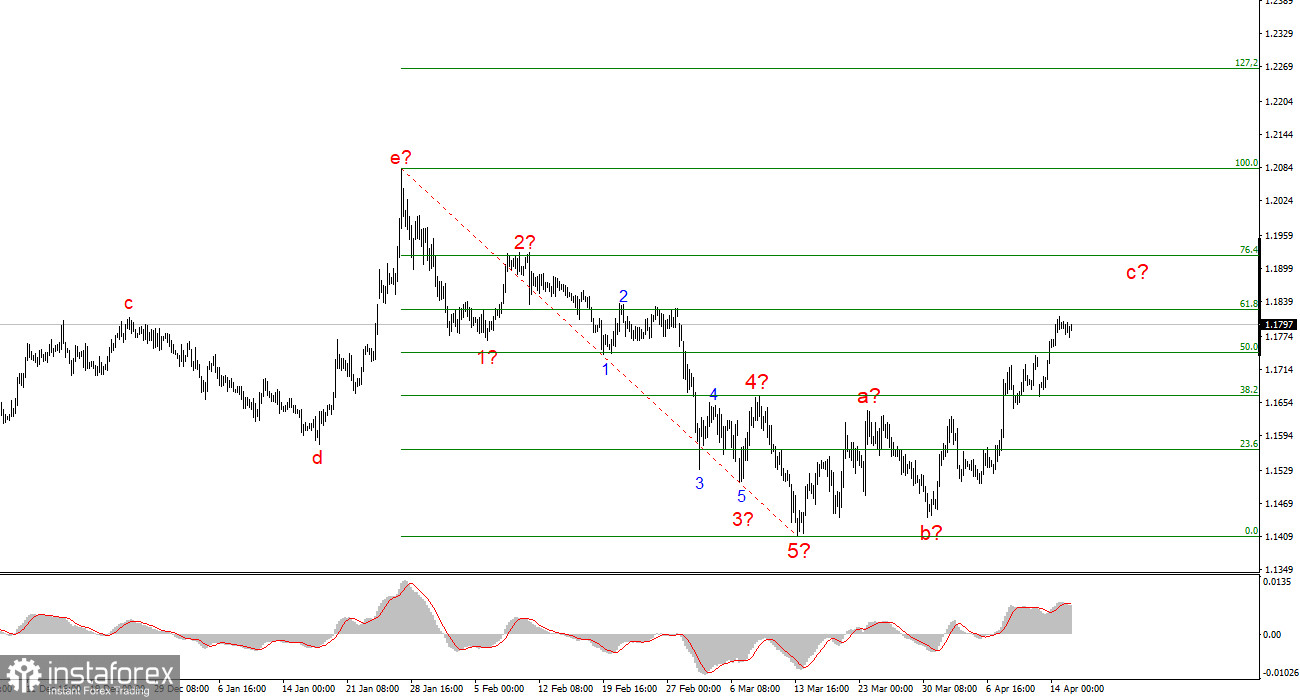
Based on the analysis of EUR/USD, I conclude that the instrument remains in an upward section of the trend (bottom picture) and, in the short term, is within a corrective structure. The corrective wave set looks quite complete and may take on a more complex, elongated form only if a stable ceasefire is established between Iran, the U.S., Israel, and ALL other countries in the Middle East. Otherwise, I believe that a new downward wave set may start from the current positions. A failed attempt to break the 1.1824 mark may lead to a price retreat from the recent highs.
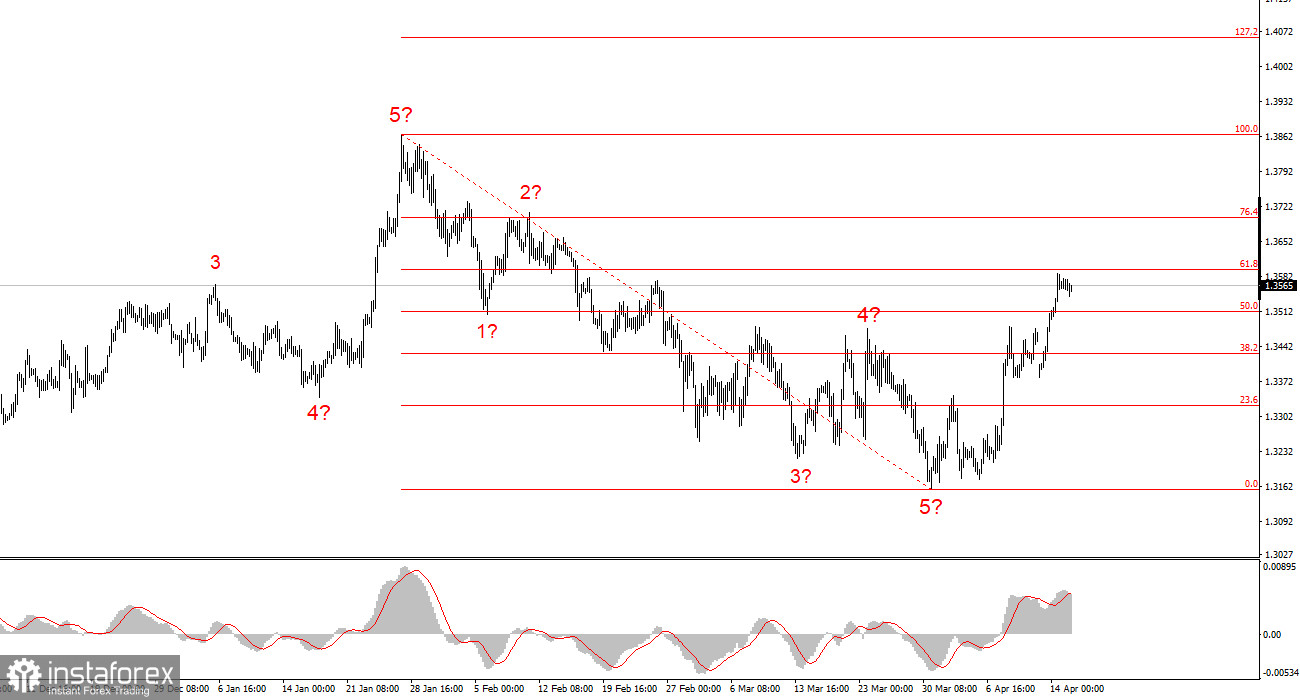
The wave picture of the GBP/USD instrument has become clearer over time, as I had assumed. Now we see a clear five-wave downward structure with an extension in the third wave on the charts. If this is indeed the case, and geopolitics does not provoke a new collapse of the instrument in the near future, we can expect the formation of at least a three-wave corrective structure, within which the pound may rise to levels of 1.3594 and 1.3698, corresponding to 61.8% and 76.1% Fibonacci levels. If a ceasefire is reached, the corrective segment of the trend may turn into an impulsive one. A failed attempt to break the 1.3594 mark could lead to a retreat from the reached peaks.

