
یہ بھی دیکھیں


 19.06.2026 12:47 AM
The USD/JPY pair on Thursday reached nearly a two-year high against the backdrop of a general strengthening of the U.S. dollar and a simultaneous weakening of the yen. Traders are confidently approaching the 161 figure.
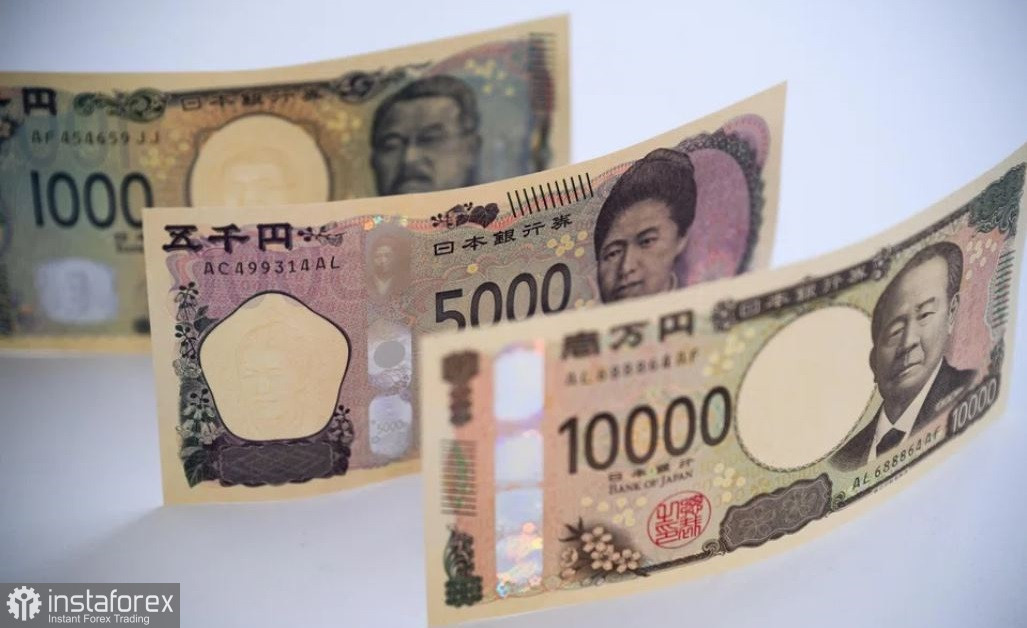
On the dollar's side are the hawkish signals from the Federal Reserve and strong macroeconomic data released in the U.S. over the past few weeks. The yen, on the other hand, is under pressure from several fundamental factors. First and foremost, the persistent interest rate differential between the U.S. and Japan continues to fuel carry trade operations. Additionally, the Bank of Japan's cautious stance exerts further pressure on the Japanese currency. Market participants are also skeptical about the effectiveness of currency interventions by Japanese authorities: previous attempts to halt the weakening of the yen resulted only in short-term (albeit significant) corrections, without changing the long-term upward trend of the USD/JPY pair.
Let's begin with the BoJ's June meeting, which resulted in a 25-basis-point rate hike to 1.0% (the highest level since 1995). Here, at first glance, a paradoxical situation has arisen: despite the tightening of monetary policy parameters, the yen not only did not strengthen but soon came under additional pressure.
Such a reaction is due to the nature of comments from BoJ officials on future monetary policy prospects and the tone of the accompanying statement. In other words, as is often the case in these situations, "the devil is in the details."
Despite the rate hike, the central bank maintained a cautious rhetoric regarding its future steps. The market did not see any signals of the central bank's readiness to accelerate monetary policy tightening. On the contrary, concerns remain among board members about the impact of external risks on the economy, suggesting that the normalization of monetary policy will likely remain gradual and very slow.
It is also worth noting that the final press conference was conducted not by the BoJ's Governor Kazuo Ueda (who missed the meeting due to hospitalization), but by his deputy Shinichi Uchida. This affected the nature of the communication: he avoided specifics and refrained from providing any timeline for the next steps, stating only that the central bank would continue to assess economic data.
Moreover, market participants took note of discussions about the program to reduce government bond purchases. Prior to the June meeting, the media discussed the possibility of slowing quantitative tightening (QT) or even a temporary pause in unwinding the balance. The mere fact of such discussions has enhanced the perception of the BoJ as one of the most cautious central banks among developed countries.
And ultimately, the persistent interest rate differential between the U.S. and Japan continues to provide additional support for the rise of USD/JPY. Even after the BoJ's rate hike to 1.0% in June, the differential remains around 250-275 basis points (with the Fed's rate range at 3.5-3.75%), which continues to stimulate carry trade activity. The yen remains one of the cheapest and most accessible funding currencies for such strategies.
Furthermore, following the June FOMC meeting, the market began pricing in the likelihood of another rate hike in the U.S. by the end of this year (given the updated dot plot). This means the interest rate differential could widen further, and carry trade operations will remain attractive, continuing to put pressure on the Japanese currency.
In other words, the prevailing fundamental backdrop favors further USD/JPY growth. This means that long positions in the pair appear logical and justified. However, there is one significant "but": the risk of currency intervention. Recall that in April, Japanese authorities entered the market when the pair exceeded 160.70. Currently, the price is approaching the boundaries of the 161 figure, raising the risks of renewed intervention.
It can be assumed that if the USD/JPY pair confidently surpasses the 161.00 mark, a response from Japanese regulators will follow—either verbal or direct intervention. Therefore, long positions at current levels appear risky, as a technical collapse of the pair could result in a drop of 200 to 500 pips within hours or even minutes.
However, after such a decline, interest in buying may actually increase: previous experiences with currency interventions show that the pair is often aggressively bought back on the very day of intervention by Japanese authorities. In other words, long positions in the pair remain relevant, but only after Tokyo responds to the situation—either verbally or through action.


