
Veja também


 14.08.2026 09:54 AM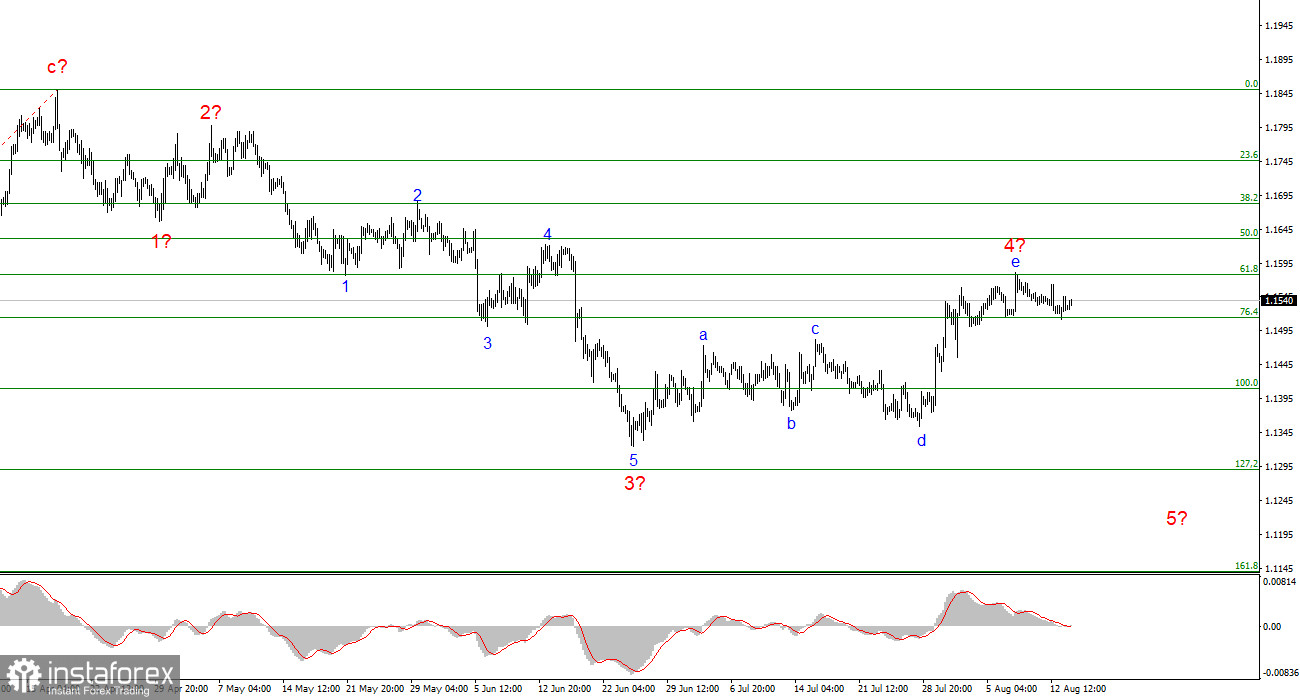
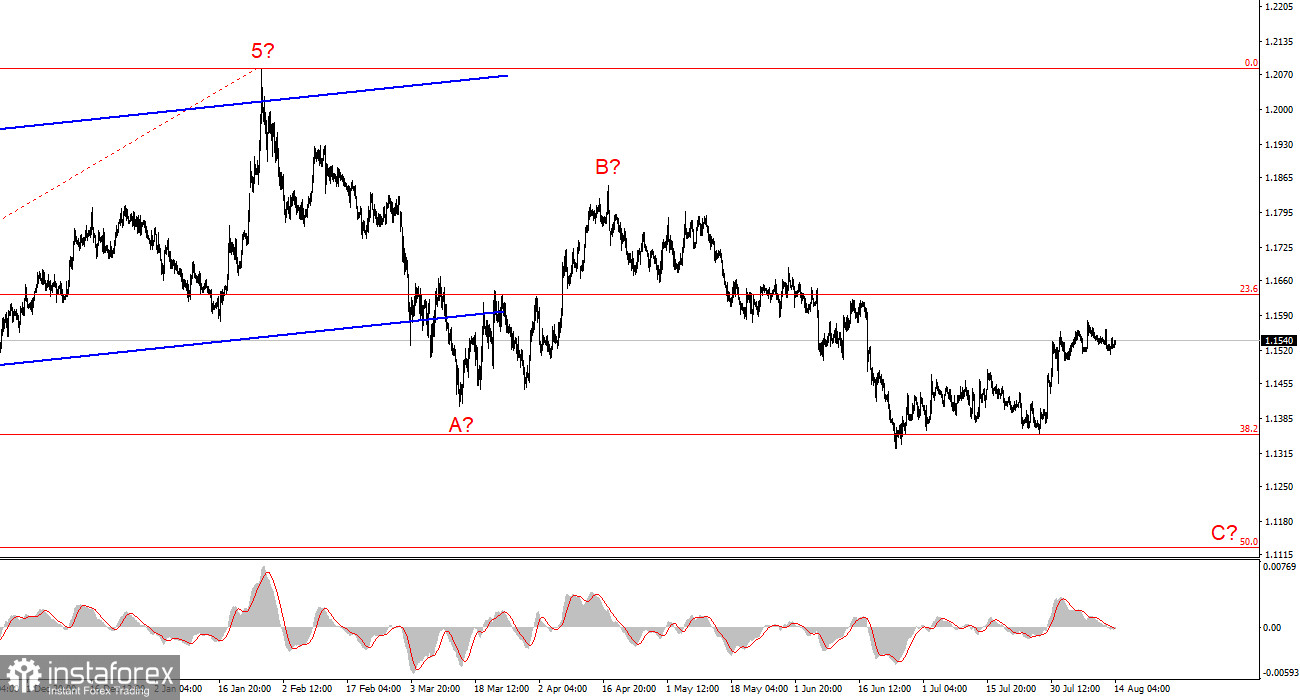
The wave analysis of the 4-hour chart for the EUR/USD instrument is becoming more complicated. There is still no talk of canceling the upward section of the trend (bottom image), which began in January of last year. However, the trend's wave structure has taken on a corrective form. In the long term, we should expect the formation of wave C, the low of which should be below the low of wave A. Currently, the low of wave C is below the low of wave A, which means that wave C could be completed at any moment or may already be finished. However, with a favorable news background for the dollar, this wave could take a more extended form.
On a smaller scale, I can identify a classic five-wave downward structure. If this assumption is correct, we are currently building wave 4, while wave 3 has taken on a five-wave form. After completing this structure, the instrument may transition to an upward set of waves. However, according to the current wave analysis, the formation of wave 5 has not yet begun. Consequently, the European currency may still drop to the 13 figure or lower.
The EUR/USD exchange rate remained unchanged on Thursday. The market did not react at all to the latest economic data from the Eurozone and the US. Should we therefore focus on these data and analyze them? In my opinion, no. I believe we should analyze those events that currently hold significance for market participants. What can we attribute to such events? Perhaps only the prospects of the Federal Reserve's monetary policy. However, everything that can be said on this topic has already been stated. Following last week's disappointing payrolls report, the probability of a Fed interest rate hike in September continued to decline this week. According to the CME FedWatch tool, the probability of a tightening of the Fed's policy in September is now at 33%. I would note that this figure has fallen from 70% over the past two weeks. This means that the market has abandoned its own "hawkish" expectations for the upcoming FOMC meeting.
Now let's ponder the longer-term perspective. If the market has changed its expectations for September under the pressure of economic data, what could prevent it from changing its expectations for the October or December meetings? Currently, the futures market builds in a 68% probability of at least one round of tightening by the end of the year. However, under the pressure of the same economic data, these "hawkish" expectations could also evaporate. If the US labor market has been falling for four consecutive months, what would prevent it from continuing to "cool"? Last year, the Fed had to cut interest rates three times to boost the labor market. This year, there is no option to "lower" rates, as inflation remains above target and is likely to accelerate again in August. Consequently, it is highly likely that at the remaining meetings through the end of the year, Kevin Warsh and his team will also prefer not to change monetary policy parameters. Of course, unless the situation with the war in the Middle East and the Strait of Hormuz changes for the better.
Based on the analysis of EUR/USD, I conclude that the instrument remains within the upward section of the trend (bottom image), while in the shorter term, it is within a downward section of the trend. In my opinion, now is a good time to try to form long positions. However, the instrument may still drop to the 13 figure as part of wave 5 in C. Wave analysis often presents surprises, so I would start shifting my focus toward purchases.
On a larger scale, an upward section of the trend is visible, after which the construction of a corrective wave set began. In the near future, we should expect the formation of wave C with targets around the 1.1352 mark, which corresponds to 38.2% Fibonacci. After the completion of the A-B-C structure, a new long-term upward trend may begin.


