
আরও দেখুন


 16.04.2026 03:00 PM
Risk assets, including the euro and the pound sterling, are showing positive dynamics amid reports that the United States and Iran are in talks to extend the ceasefire and resume negotiations on a long-term peace agreement. This optimism persists despite rising tensions around the Strait of Hormuz.
According to the Associated Press, both sides have reached a principled agreement to continue diplomatic consultations. This became possible after the first, but inconclusive, round of talks held in Pakistan last weekend. Mediators are actively working to find compromise solutions on key issues such as the status of the Strait of Hormuz and Iran's nuclear program, with the aim of reaching an agreement before the current truce expires, scheduled for April 7.
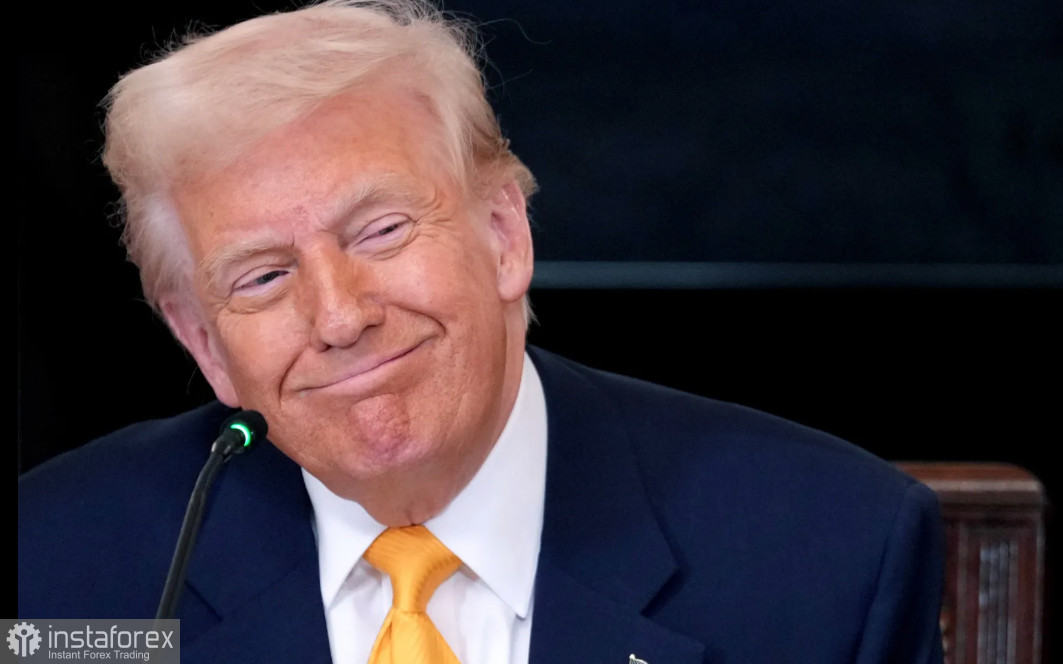
On Tuesday, US President Donald Trump expressed confidence that the likelihood of renewed hostilities is falling. He said that the conflict, which has lasted nearly seven weeks, is in its closing stage, reinforcing market expectations for a possible de-escalation. Iran's foreign ministry said that a Pakistani delegation will visit Tehran on Wednesday and that Islamabad will continue to act as an intermediary in communications between the two sides.
Nevertheless, the situation around the Strait of Hormuz, a strategically important route for global energy supplies, remains extremely tense. The United States has imposed a naval blockade, effectively halting Iranian oil exports, while Tehran, in turn, is blocking the strait for other vessels. Such mutual escalation creates serious risks for global energy security.
Ali Abdollahi, commander of Iran's joint military staff, said that Iran viewed the extension of the American blockade as a prelude to a breach of the ceasefire. He warned that, if the blockade persists, Iran's armed forces will take retaliatory measures that could include a complete halt of exports and imports through ports in the Persian Gulf, the Gulf of Oman, or the Red Sea. Such actions would not only exacerbate geopolitical tensions but could also trigger a sharp rise in oil prices, with a significant impact on the global economy.
Oil prices remain elevated, although on Wednesday Brent fell below $95 a barrel. That is roughly 33 percent higher than before the start of the war.
It is worth noting that, since the announcement of the truce on April 7, hostilities in the Middle East have largely ceased. The exception is Lebanon, where Israel continues to exchange fire with the Iran-backed Hezbollah. On Wednesday Israel's state broadcaster reported that talks on a possible ceasefire are underway, but no decision has been made. This, too, has supported demand for risk assets, including on the currency market, weakening the US dollar.
As for the current technical picture for EUR/USD, buyers now need to think about taking the 1.1820 level. Only that will allow a target test of 1.1840. From there it is possible to reach 1.1866, but doing so without support from major players will be rather difficult. The furthest target will be the high at 1.1880. In the event of a decline, I expect significant buyer activity only around 1.1780. If no one appears there, it would be prudent to wait for a new low at 1.1757 or to open long positions from 1.1725.
Regarding the current technical picture for GBP/USD, pound buyers need to take the nearest resistance at 1.3585. Only that will allow a target of 1.3610, above which further breakout will be rather problematic. The most distant target will be the 1.3635 area. In the event of a drop, bears will attempt to seize control of 1.3545. If they succeed, a breakdown of the range will deal a serious blow to bulls and push GBP/USD toward the low of 1.3510, with a prospect of reaching 1.3480.


