
Vea también


 20.05.2026 07:27 AM
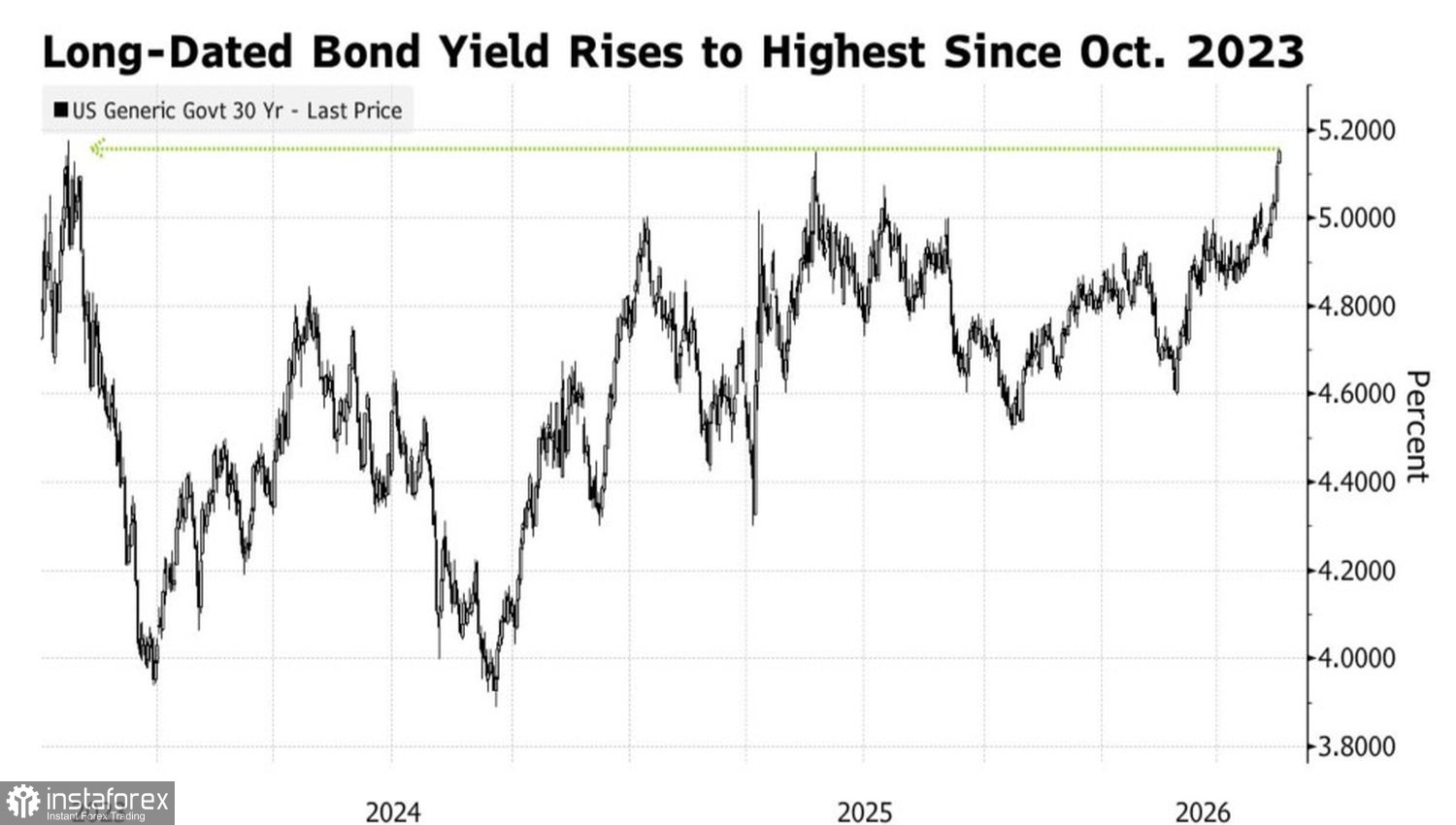
Sometimes the best action is no action, but Fed passivity is starting to worry investors. Long-term US Treasury yields have reached highs not seen since 2023 on fears the central bank will not act decisively to curb accelerating inflation. Alongside a political crisis in the UK and capital repatriation by Japanese investors, this has pushed global sovereign yields higher and reinforced bearish pressure on EUR/USD.
Treasury yield dynamics
Societe Generale notes that two-year Treasury yields had traded in a 3.4–3.7% range from September 2025 until the outbreak of the Middle East conflict, despite strong US growth, massive AI investment, and signs of inflationary pressure on the periphery. Over that period, the US dollar index traded in a 96–101 channel, with EUR/USD ranging between 1.14 and 1.21.
The rally in yields has woken the US dollar. Where earlier greenback strength was constrained by a passive Fed stance relative to other central banks, markets are now demanding a rethink from the Fed. Derivatives have moved the expected start of monetary tightening from April 2027 to December, and Yardeni Research is urging the Fed to abandon a passive, spectator strategy.
If the Fed stays on the sidelines, investors will fear that the central bank is allowing inflation to run, which is why Treasury holders demand a higher risk premium. By remaining inactive and not signaling tightening, the Fed risks losing control of the bond market.
Dollar demand is also rising because excess dollar liquidity is ebbing, Credit Agricole observes. Demand for the greenback is being driven by the Brent rally and a surge in US oil and petroleum exports — now at a record 14.2m b/d. As the Strait of Hormuz blockade continues, that demand is likely to grow, while the IEA warns that commercial oil stocks are being drawn down rapidly.
Treasuries yields and S&P 500 dynamics
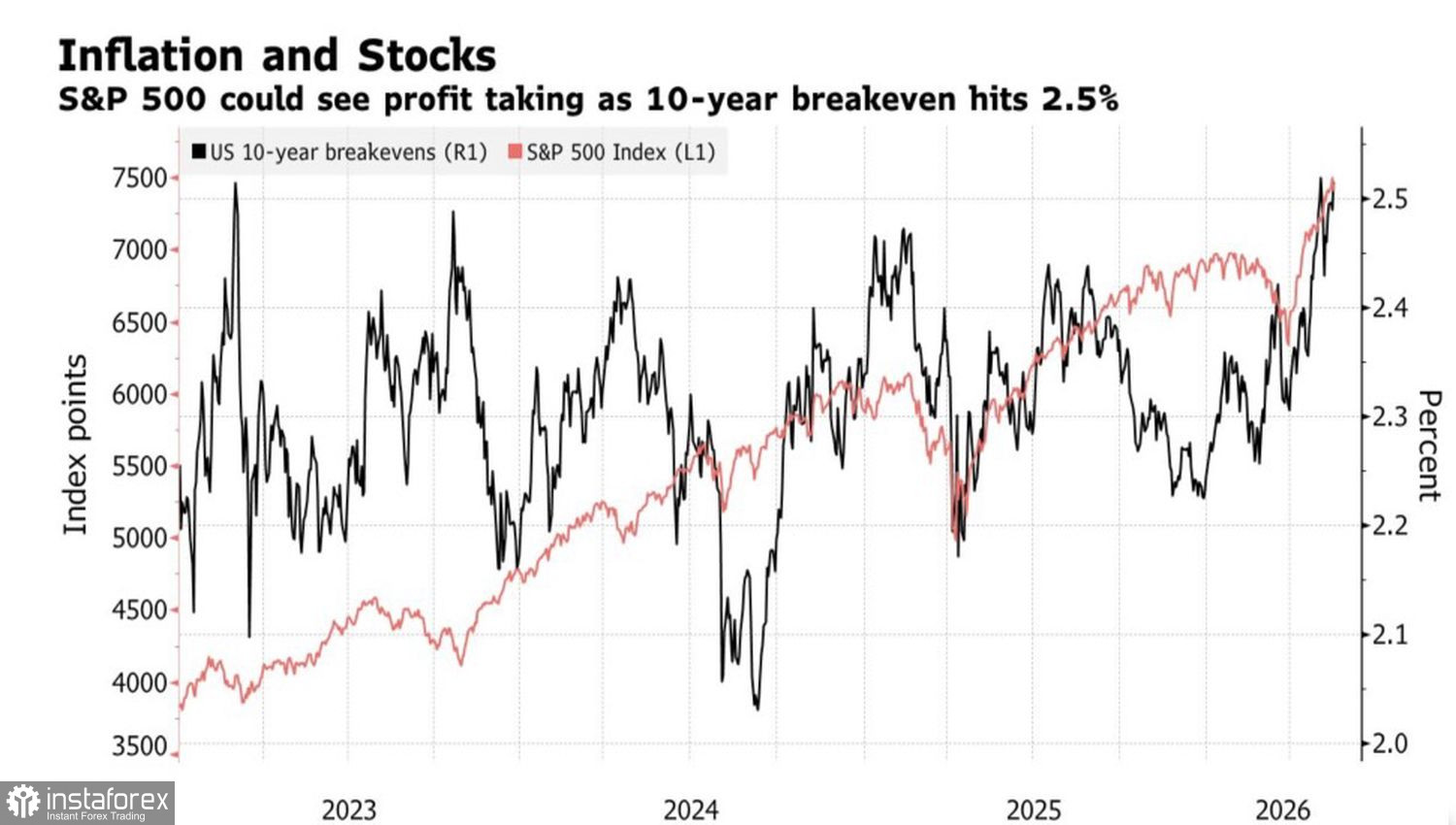
The Treasury yield rally increases US corporates' funding costs, squeezes profits, and weighs on equity indices. That raises the risk of an S&P 500 correction and is being interpreted as a deterioration in global risk appetite. In such an environment, demand for the US dollar as a safe-haven asset typically rises.
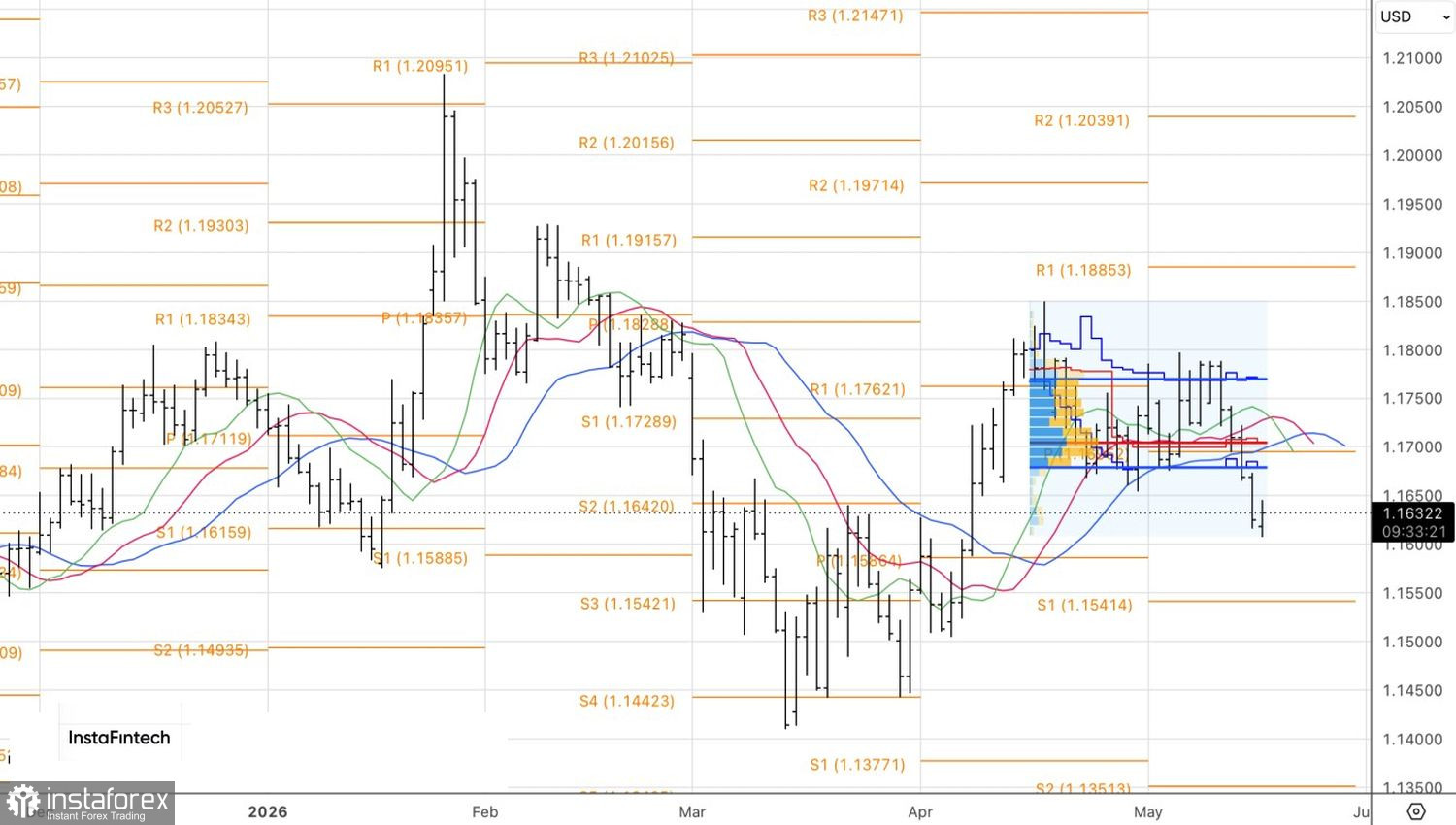
Technically, the daily chart shows that EUR/USD is attempting to find a bottom after a four-day slide. However, as long as the euro trades below the 1.1675 level, the bias remains bearish. The recommendation is to stick to a selling strategy.
You have already liked this post today
*El análisis de mercado publicado aquí tiene la finalidad de incrementar su conocimiento, más no darle instrucciones para realizar una operación.


