
See also


 30.03.2026 10:00 AM
Markets have finally acknowledged the long-running nature of the Middle East conflict, pushing equity indices into correction territory one by one. Russell 2000 led the move, followed by the Nasdaq Composite and the Dow Jones. The S&P 500 is just shy of the 10% decline from recent highs that defines a correction. The key question is how deep the pullback will be.
For the S&P 500, there are both bad and good signs. The positive is that during past armed conflicts, the broad index fell less sharply than during economic shocks and recessions. Deutsche Bank analysis shows that, on average across the 30 largest geopolitical events since 1939, the S&P's drawdown was a modest 4%. Recoveries were typically very quick.
S&P 500 reaction to conflicts and crises
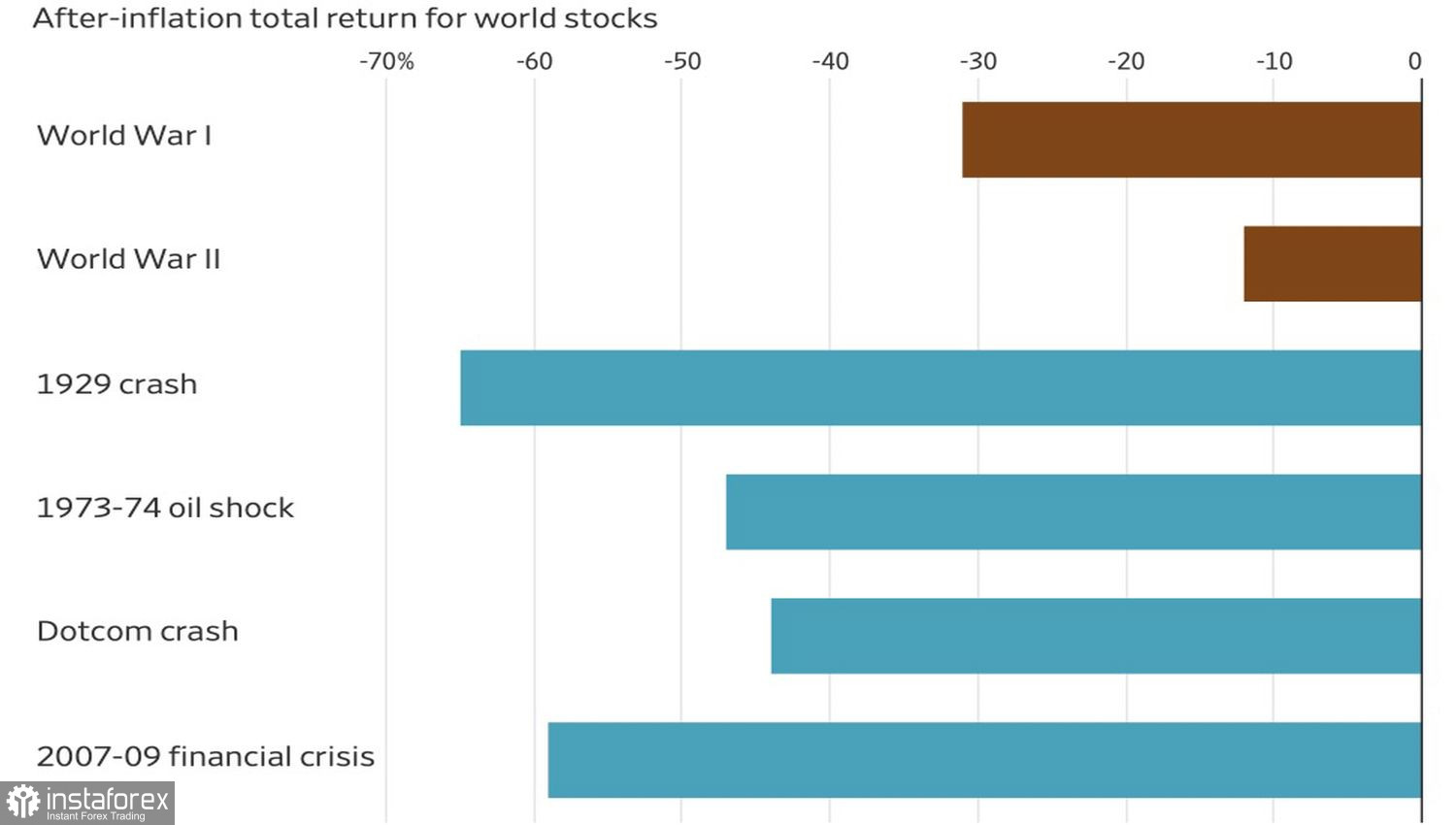
The reason is geographical distance: the United States has historically been much farther from the epicenter of conflicts. Germany and other European countries suffered far more than the US during World War II or during fighting in Ukraine.
At first glance, the war in Iran should not inflict as much economic pain on the US. The country is a net energy exporter and, territorially, the Middle East is very distant.
In practice, however, the acceleration of inflation and the Fed's willingness to keep interest rates elevated, combined with consumer-unfriendly fuel price increases, point to serious problems for the US economy. Fears of stagflation and a recession are pushing the S&P 500 lower.
Tech sector earnings forecast dynamics
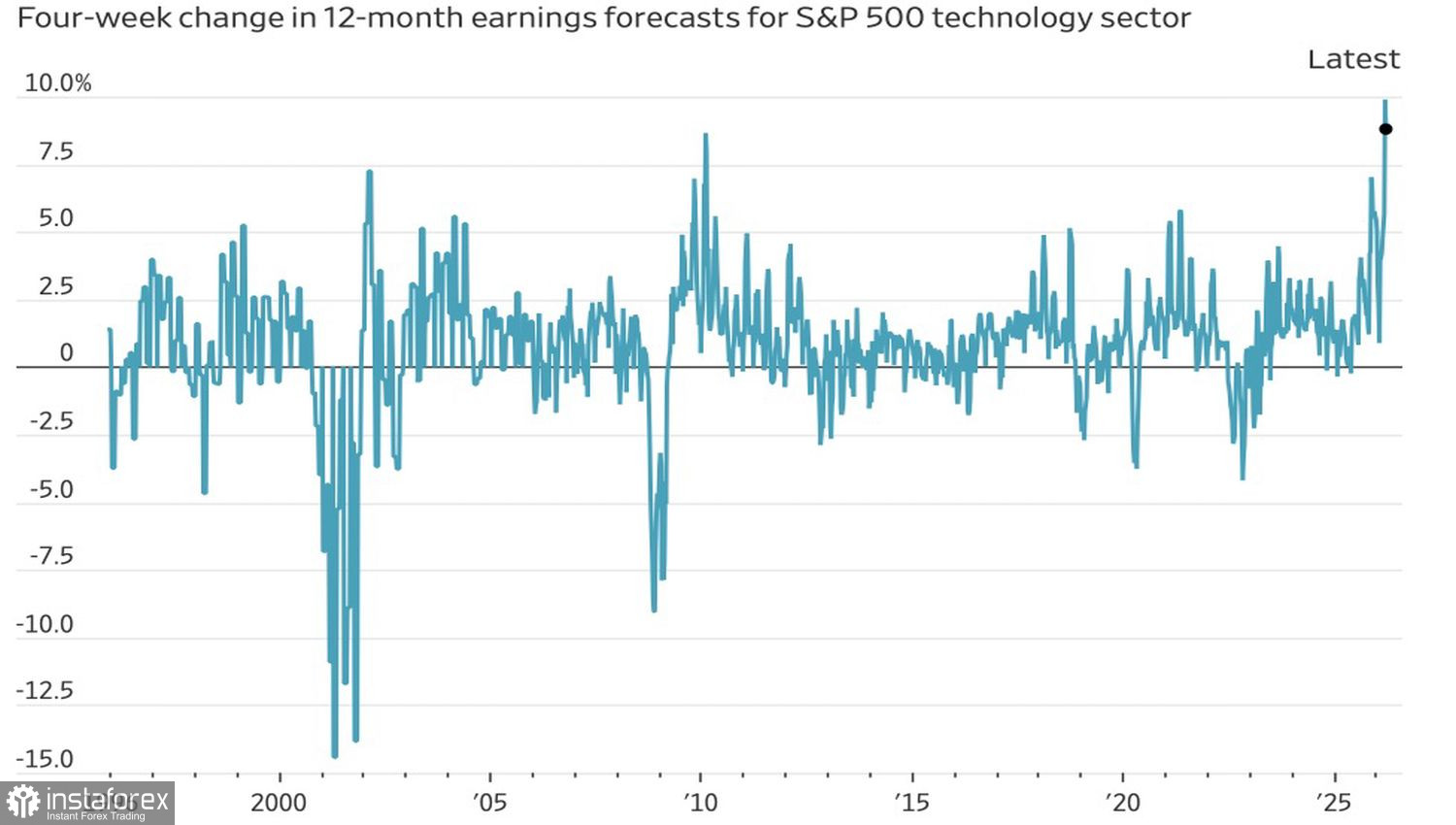
Still, the US market has a kind of safety buffer — and it is not Donald Trump's speeches, which few believe anymore. It is the material under-valuation of technology companies. According to Wall Street consensus forecasts, the Magnificent Seven's earnings are expected to rise by 19% in 2026, and the rest of the S&P 500 by 16%.
AI-driven support for the economy in the form of productivity gains and massive investment has not disappeared. The United States is far more resilient than Europe or Asia, which supports the case for continued capital inflows into US equities.
However, the longer the conflict in the Middle East continues, the more pain geopolitics will inflict on the US economy and equity indices. In that respect, a US ground operation in Iran would be another blow to stock bulls.
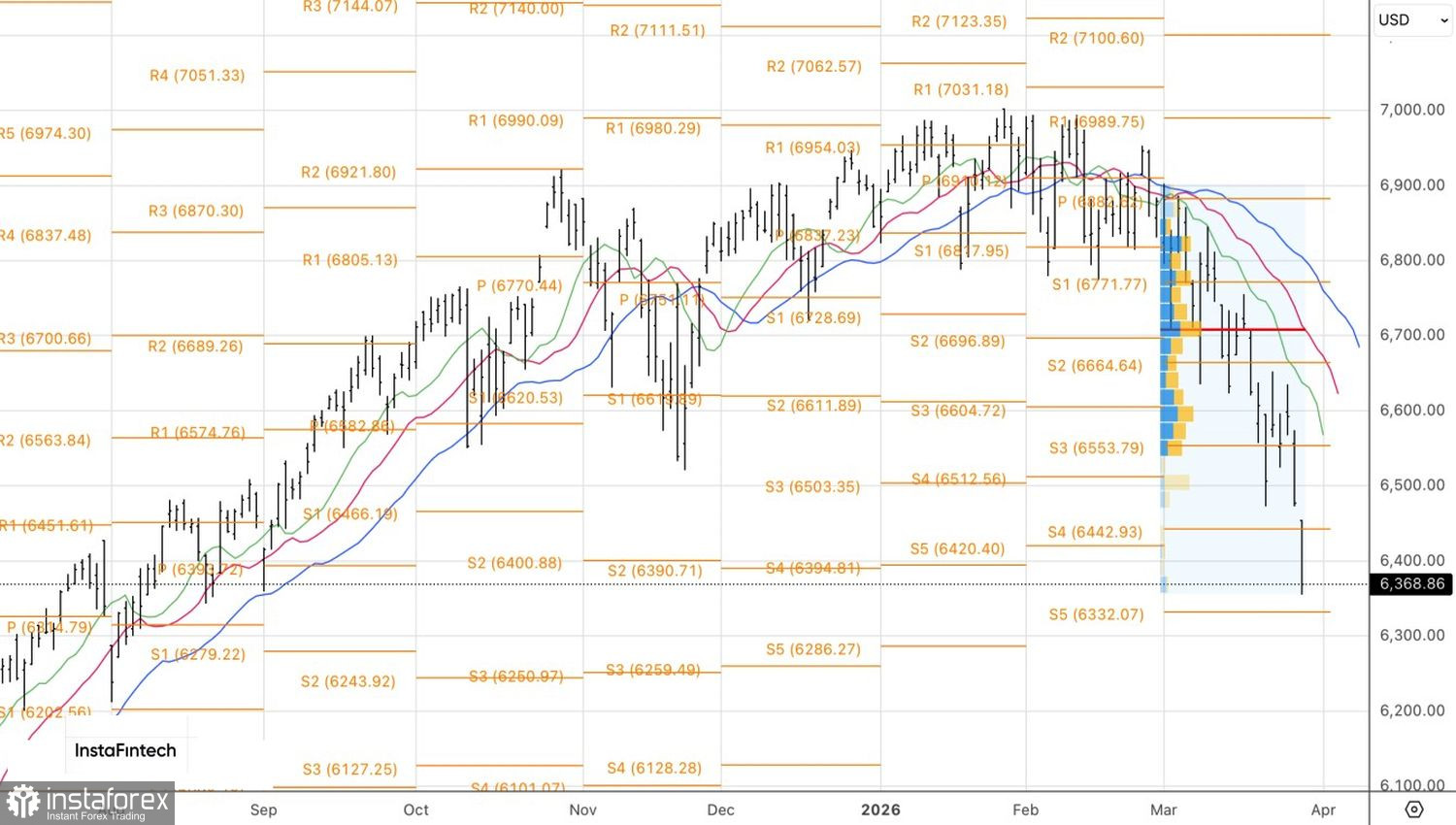
Technically, the daily S&P 500 chart shows a continued corrective move within the uptrend. The first of two previously set short targets, 6,420 and 6,290, has been hit. The second target is next. It makes sense to keep the emphasis on selling. The longer the pullback lasts, the greater the chances of reaching the levels of 6,100 and 6,000.


