
See also


 17.06.2026 06:14 PM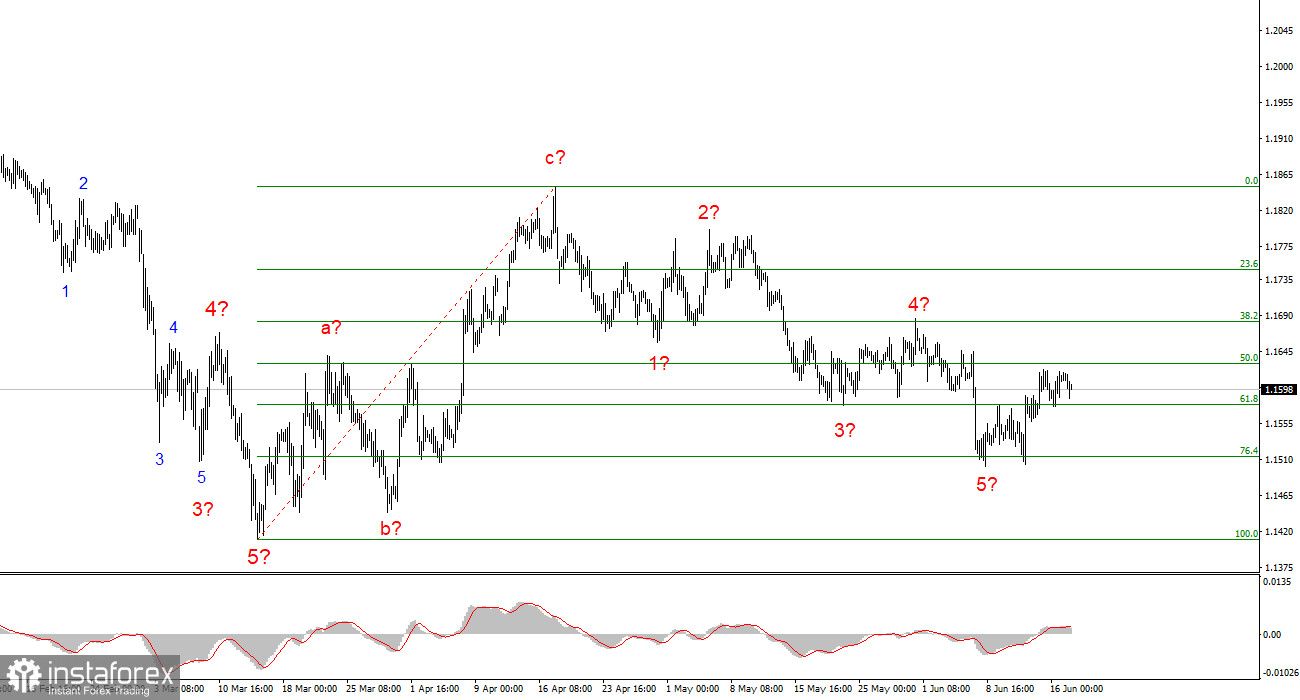
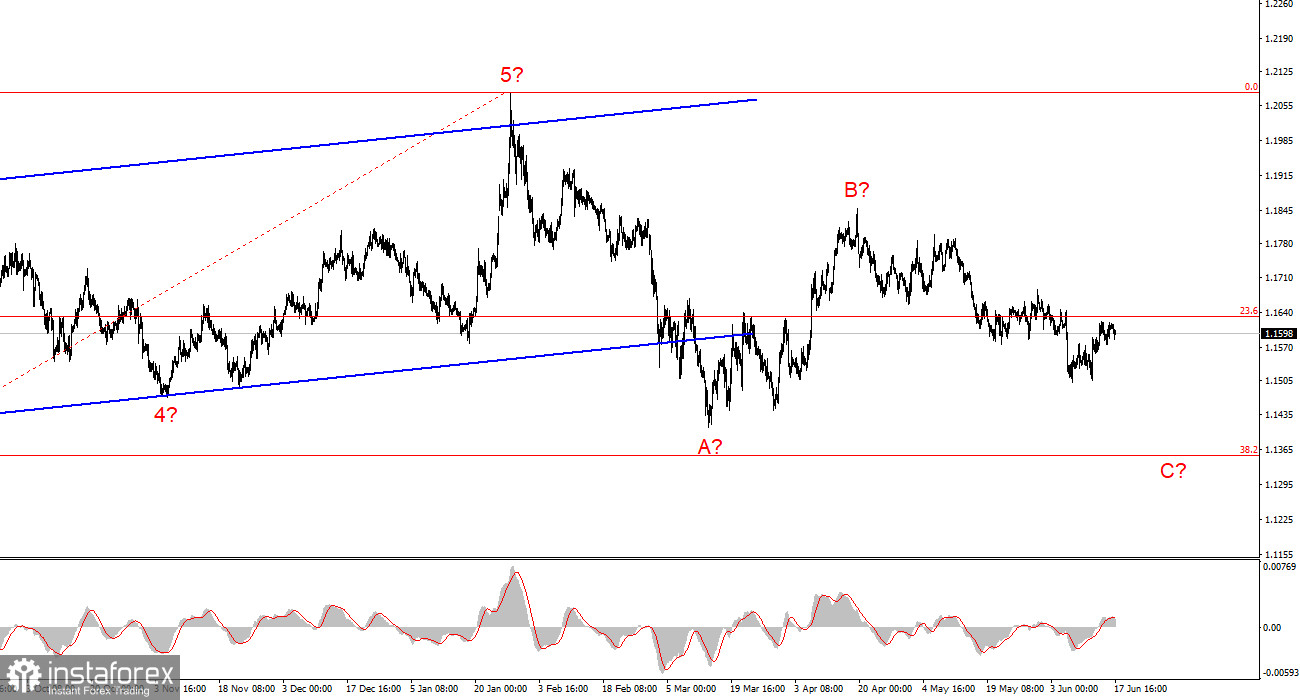
The wave pattern on the 4-hour chart of EUR/USD has become relatively clear. There is still no indication that the upward trend segment (shown in the lower chart), which began in January of last year, has been canceled. However, the trend structure has now taken on a corrective form. In the longer term, wave C may develop, with its low expected to fall below the low of wave A. At the moment, it is difficult to believe in such a significant decline in the euro, as the conflict in the Middle East appears to be nearing its conclusion and the US dollar currently lacks other major sources of support. Therefore, the anticipated wave C could ultimately be truncated.
On the lower time frame, I can identify a classic five-wave bearish structure. Following its completion, the pair may transition into a new upward wave sequence, and the current structure appears complete. Consequently, a rise in the euro can be expected from the 1.1513 level, which corresponds to the 76.4% Fibonacci retracement level. However, without geopolitical support, the euro cannot rely on strong market demand.
The EUR/USD pair declined by 20 basis points on Wednesday, while the day's trading range was only 15 points. That fact alone illustrates how strongly the market is focused on the outcome of the Federal Reserve meeting and Kevin Warsh's first press conference as Fed Chair. While I cannot know what Mr. Warsh will say during the press conference in an hour, it is clear that market participants are not expecting any major surprises. Trading activity has virtually come to a standstill.
Among Wednesday's economic releases, the only notable event was the US retail sales report for May. Retail sales increased by 0.9%, exceeding market expectations of 0.5%. Under normal circumstances, such data should have provided at least some support for the US dollar. However, the dollar weakened after the report was released, once again confirming an obvious reality: the market continues to ignore most economic data.
The same applies to the UK inflation report. Although inflation surprised expectations for the second consecutive month, the British pound moved only 20–25 points following the release.
One could argue that traders chose to ignore secondary data while waiting for the Federal Reserve's decision. However, what exactly is the market expecting? Kevin Warsh is unlikely to announce a return to monetary tightening. The Federal Reserve is almost certain to leave interest rates unchanged. At the same time, any references to future rate cuts will likely disappear from the official statement. Given recent geopolitical developments, I would expect the Fed to maintain a neutral stance.
As a result, market activity may remain subdued even after the meeting. The euro still retains reasonable potential for further appreciation, but demand for the single currency remains weak.
Based on my EUR/USD analysis, I conclude that the pair remains within the broader upward trend segment (shown in the lower chart), while in the shorter term it remains within a downward trend segment that may already be complete.
In my view, the current environment offers a reasonable opportunity to consider long positions. The unsuccessful attempt to break below 1.1513, which corresponds to the 76.4% Fibonacci retracement level, together with the completed appearance of the bearish trend segment, suggests that the pair may transition into a new upward wave sequence targeting the 1.1700 level and above.
On the higher time frame, an upward trend segment remains visible, followed by the development of a corrective wave structure. In the near future, wave C may form with targets near 1.1352, corresponding to the 38.2% Fibonacci retracement level. Once the A-B-C corrective structure is complete, a new long-term bullish trend may begin.
Key Principles of My Analysis:


